Prime series
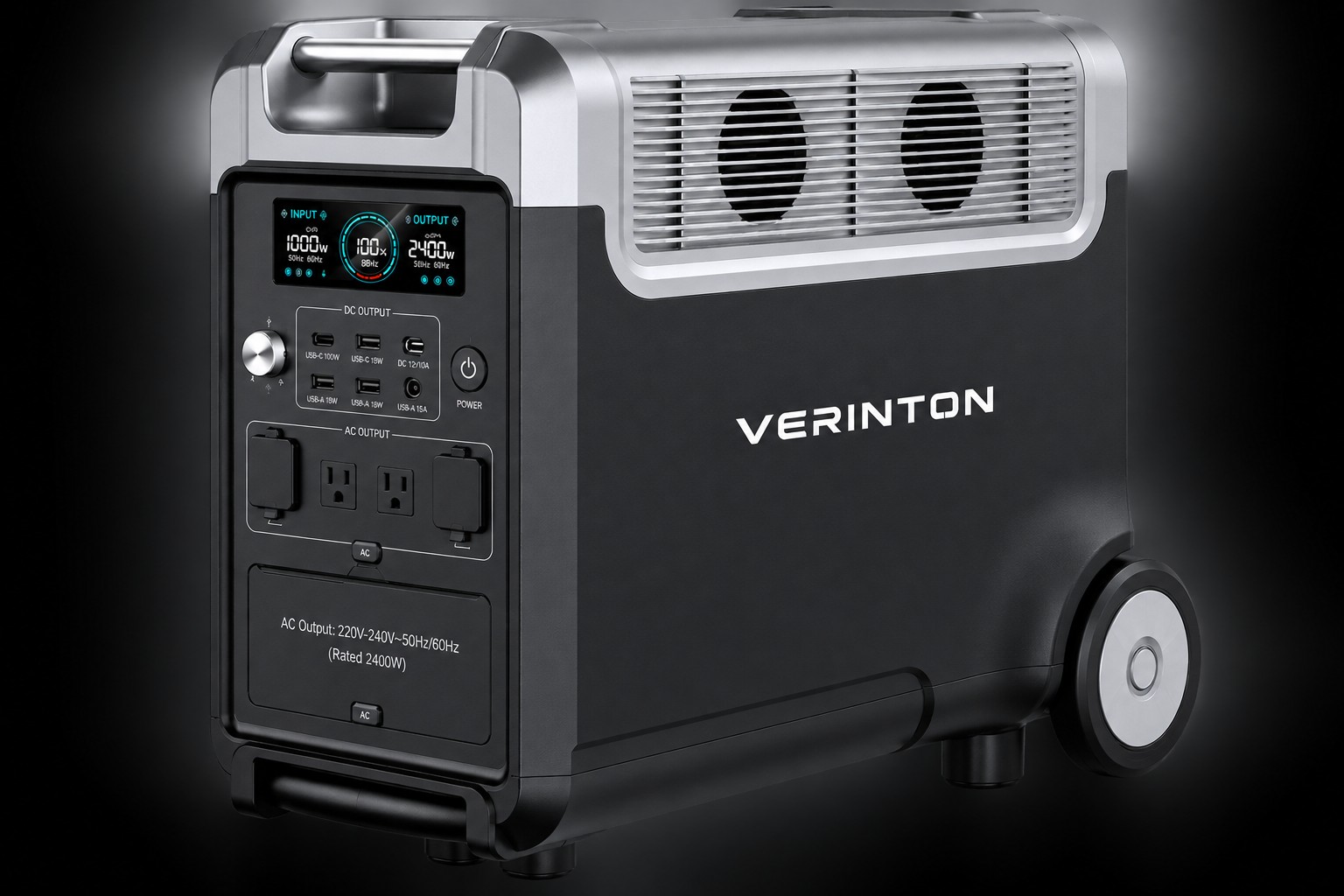
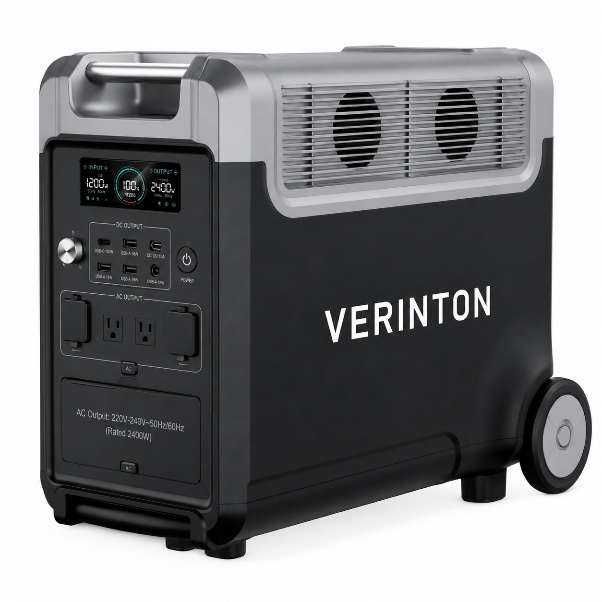
VERINTON Prime 1800For Home Appliances, Fridge, Microwave, Power Tools & Long Blackouts
1536 Wh LiFePO4 station with 2000 W rated output and 1.2 hour recharge
 EV Grade cells
- Capacity
- 1536 Wh
- AC Output
- 2000 W rated
- AC Recharge
- About 1.2 hrs
- Expandable to
- 4608 Wh
Suggested retail price
839 €
approx. $906 in USD
- USD
- $906
- AUD
- $1,384
- CAD
- $1,242
- CNY
- ¥6,586
- KRW
- ₩1,216,550
- SGD
- $1,217
Prices are in euro as the reference currency. Other currencies are indicative conversions and can vary by market, taxes and dealer.
Covered by the VERINTON warranty · registration activates the full term
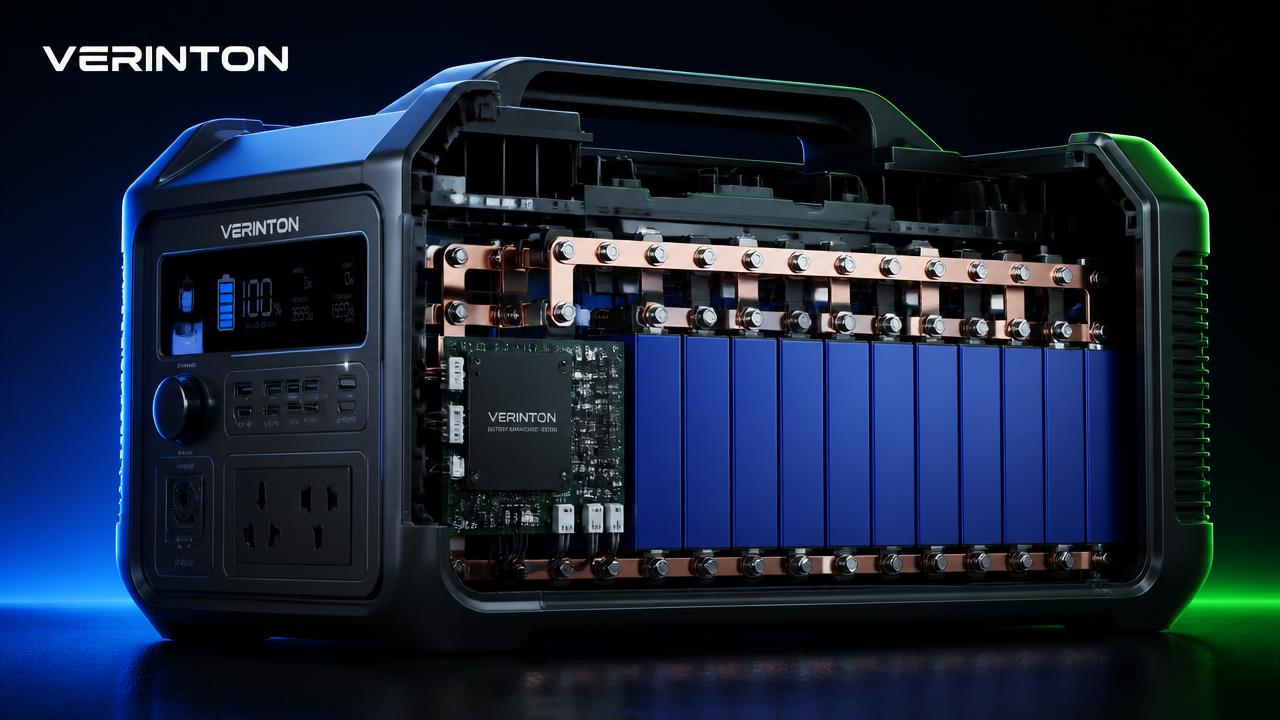
Powered by EVE Energy
EV Grade battery cells from a top tier global cell maker
This model is built on EV Grade prismatic LiFePO4 cells from EVE Energy, one of the leading battery cell brands supplying electric vehicle and energy storage makers worldwide. The same class of cell that moves electric cars gives you 4000 or more cycles, stable output under heavy load, and automotive level thermal safety.
Key power features
- Energy stored
- 1,536 Wh
- Continuous output
- 2,000 W
- Phone charges
- 68x
- Fridge runtime
- 8.7 hrs
Estimated runtime by appliance
- Circular saw (1800 W)44 min
- Electric kettle (1500 W)52 min
- Microwave (1000 W)1.3 hrs
- Inverter aircon 1 HP (750 W)1.7 hrs
- Refrigerator (150 W)8.7 hrs
- 55 inch TV (120 W)11 hrs
Estimates assume 85 percent inverter efficiency. Real runtime varies with load and temperature.
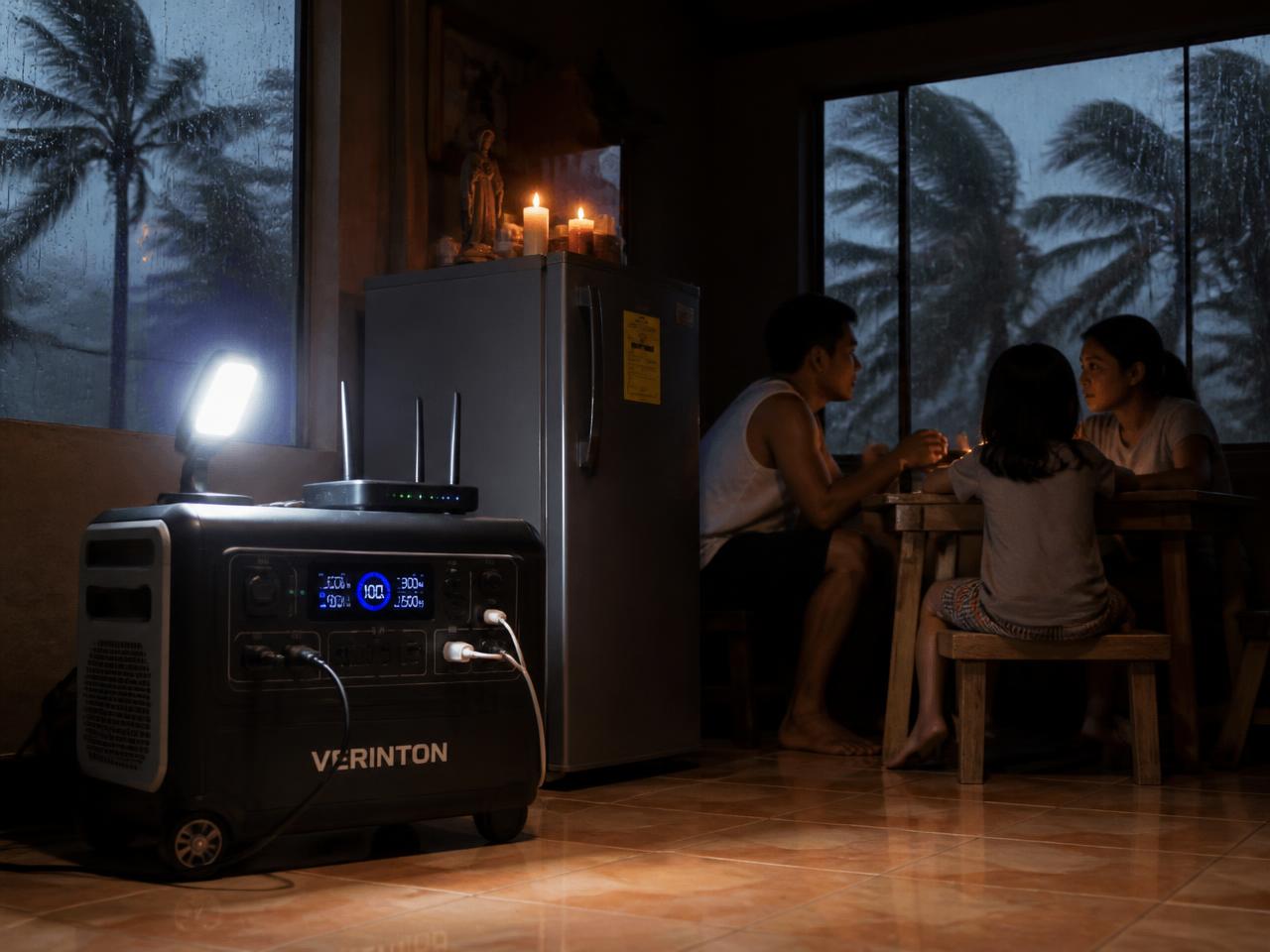
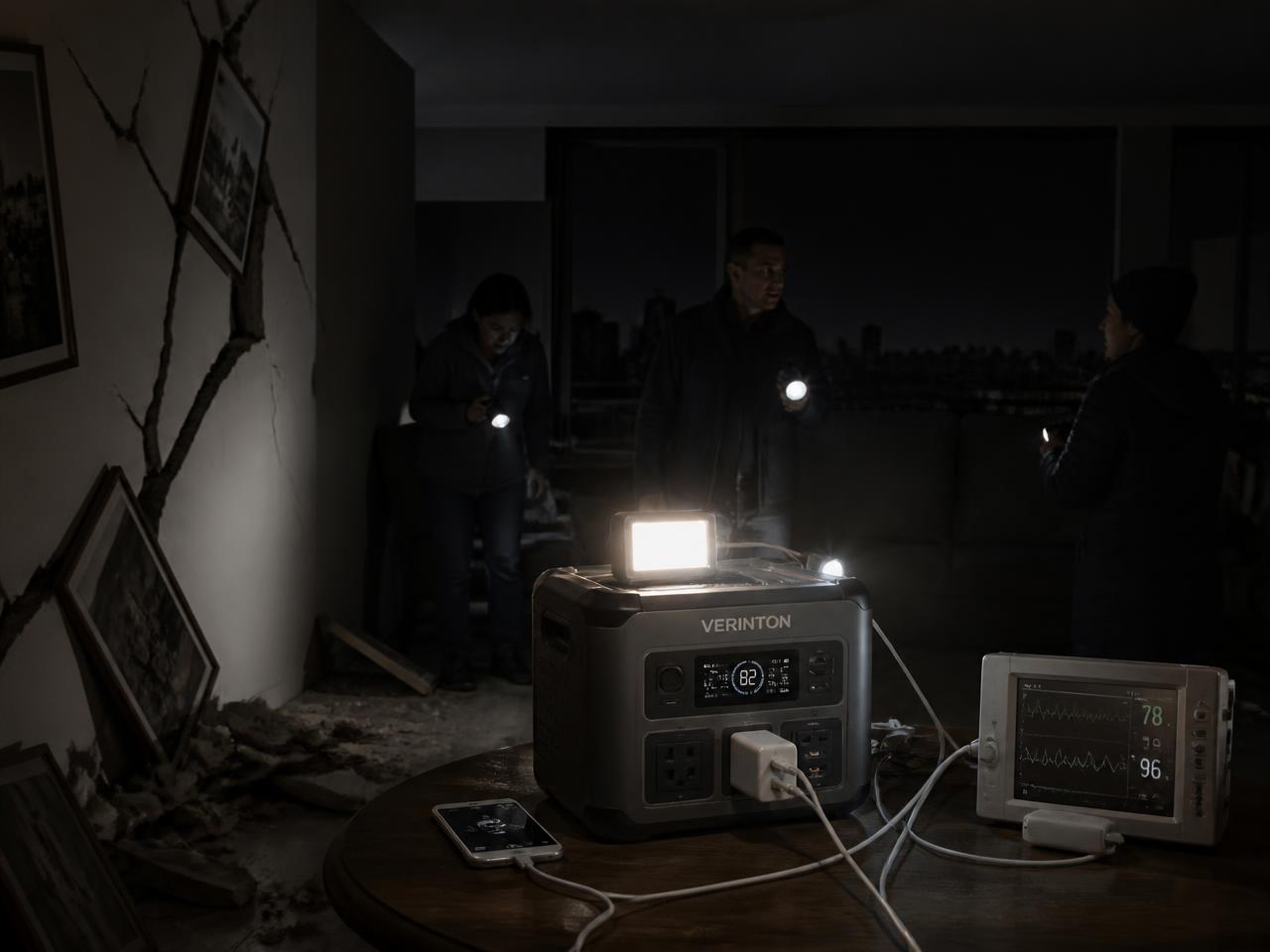
When a typhoon or snow storm takes the grid down
- Silent and safe indoors, unlike a generatorNo fuel, no fumes and no carbon monoxide, so the unit runs inside a sealed house while a typhoon or blizzard is still overhead. Nothing to store, spill or queue for at the pump.
- Keeps food, medicine and comms alive for daysA refrigerator, insulin cooler, phones, radio and router are the loads that matter in a multi day outage. Running only those, a station stretches from one night to several days.
- Automatic UPS switchover during brownoutsWhen the grid flickers ahead of a storm the station takes over in about 20 ms, so CPAP machines, medical monitors, security cameras and internet stay online without a reset.
- Recharges from sun, car or grid between outagesAfter a typhoon the grid can stay down for a week. MPPT solar input refills the pack during daylight, and car or wall charging tops it up fast in the hours power returns.
- Cold weather ready chemistryLiFePO4 cells discharge down to -20 C on the larger models, and the battery management system heats and protects the pack through a snow storm instead of shutting down.
How to use your power station for the longest life span
- Check the wattage of every appliance firstRead the label or nameplate and add up the running watts of everything you plan to plug in. Keep the total comfortably under the rated output of the station instead of sitting at the limit all day.
- Allow headroom for motors and compressorsRefrigerators, freezers, water pumps, aircon units, drills and grinders draw three to seven times their running watts for a moment at start up. Size the station by that surge figure, and start motor loads one at a time rather than together.
- Treat heating appliances as heavy loadsKettles, rice cookers, irons, hair dryers, microwaves and induction hobs pull their full rated watts continuously. Run them in short sessions, one at a time, and expect them to consume capacity far faster than lights or electronics.
- Watch out for devices that spike on startLaser printers, air compressors, welding machines and large TVs pulse hard the instant they switch on. If the station trips on overload, unplug everything, restart it, then reconnect the loads in order from smallest to largest.
- Use solar panels correctlyMatch the panel voltage and current to the solar input range printed on the station, keep connectors dry, and face the panels square to the sun with no shade across a single cell. Wire panels in series for higher voltage on long runs, and never exceed the maximum input voltage.
- Do not drain the battery flatStop at roughly 10 to 20 percent for daily use rather than running to zero. Shallow cycles are gentler on LiFePO4 cells and add years of service compared with deep discharges every time.
- Store it around half charge and top it upFor long storage leave the pack near 50 to 60 percent, switch the outputs off, and recharge it every three months. A unit left empty for months can fall into deep discharge protection.
- Keep it cool, dry and ventilatedLeave clear space around the fan vents, keep the unit off carpet and out of direct sun, and avoid charging a pack that is soaking wet or below freezing. Heat is the single largest cause of premature capacity loss.
- Charge with the supplied or approved equipmentUse the original adapter, car cable or an approved solar array. Unapproved chargers can push the wrong voltage past the protection circuits and shorten the life of the cells.
- Exercise it and register the warrantyRun a full charge and partial discharge every couple of months so the battery management system can rebalance the cells, keep the firmware current, and register the product so the full warranty term is active before you need it.
Built for real life
Everyday scenarios our owners power with VERINTON.
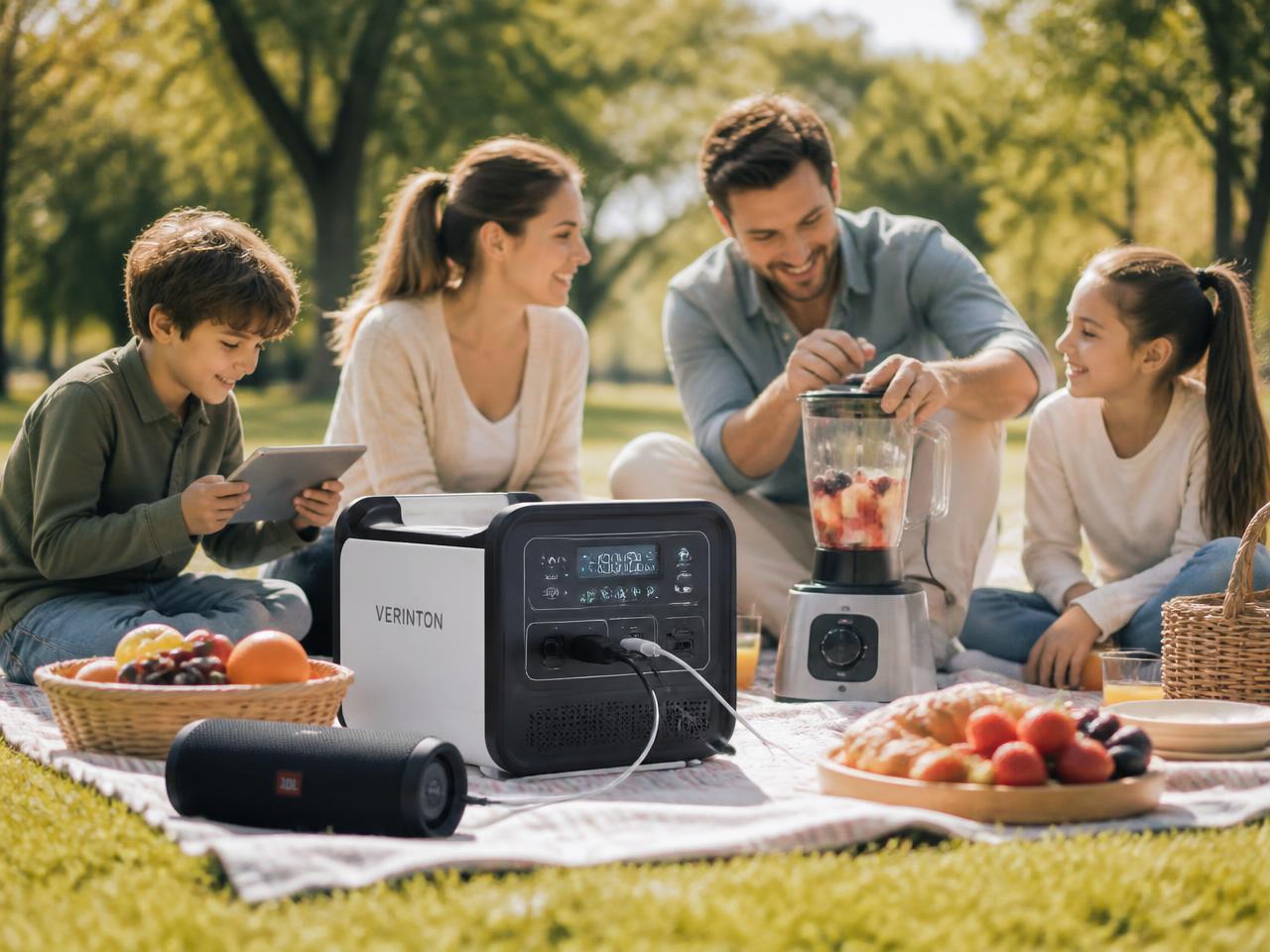

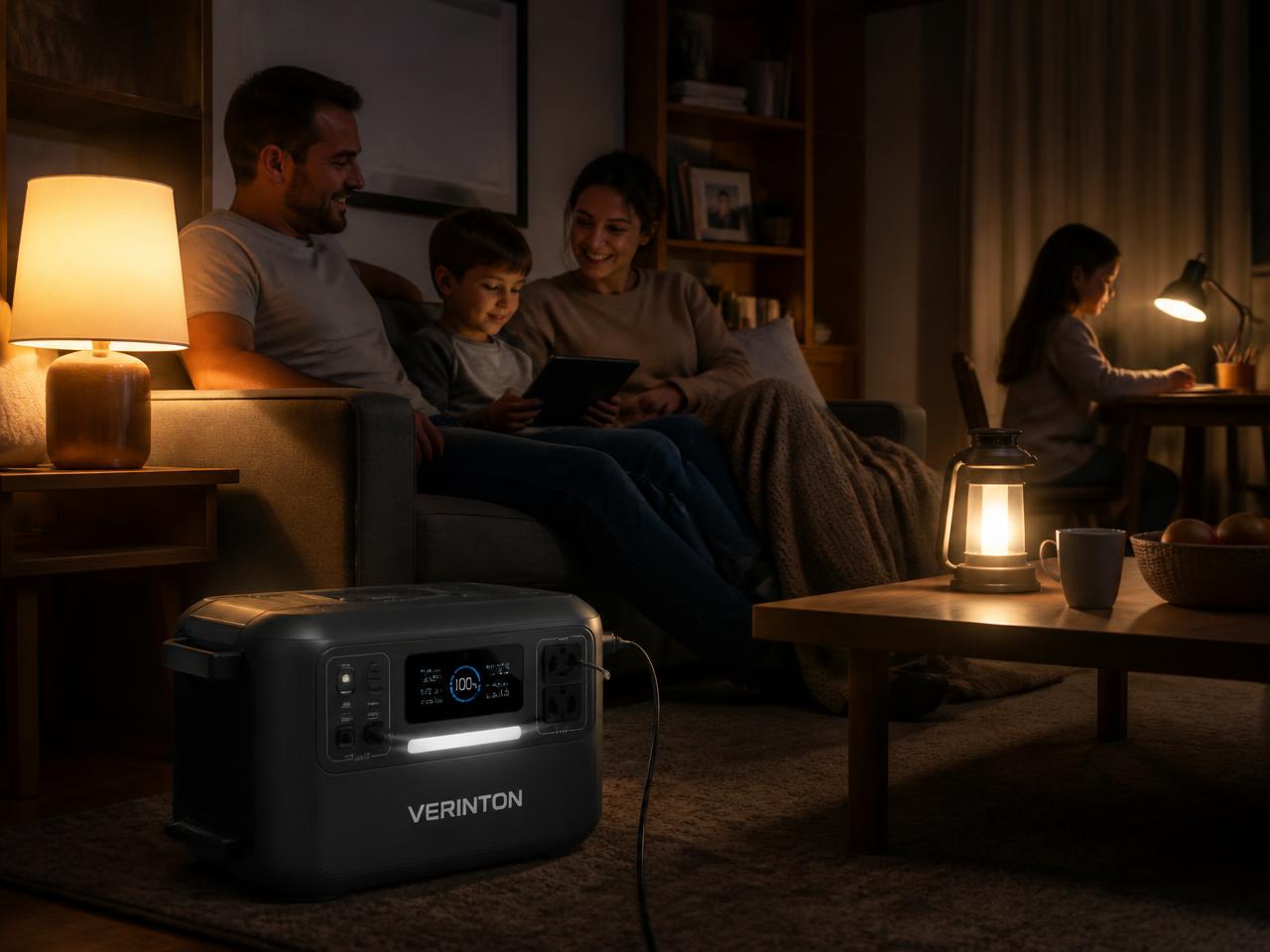

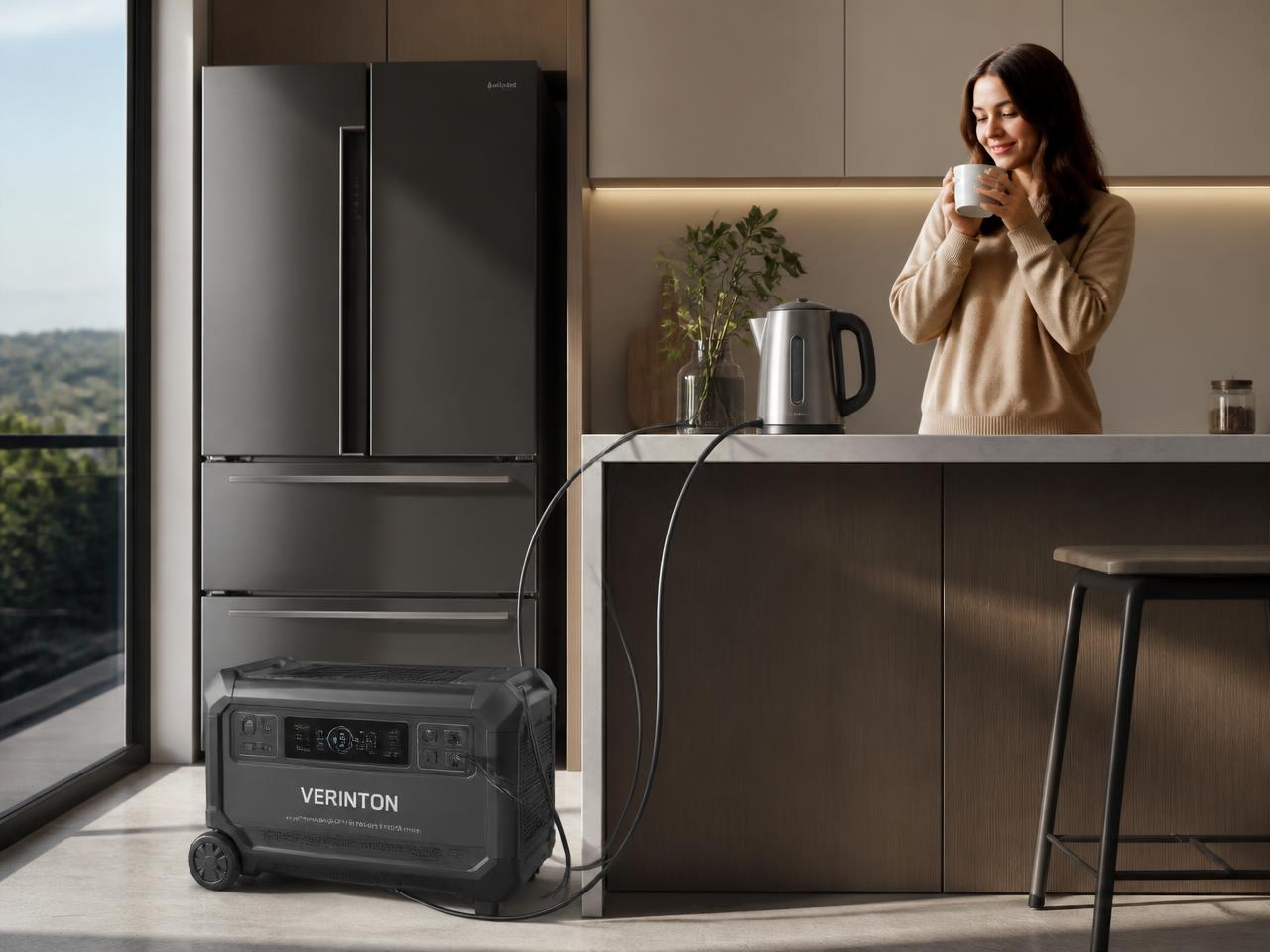
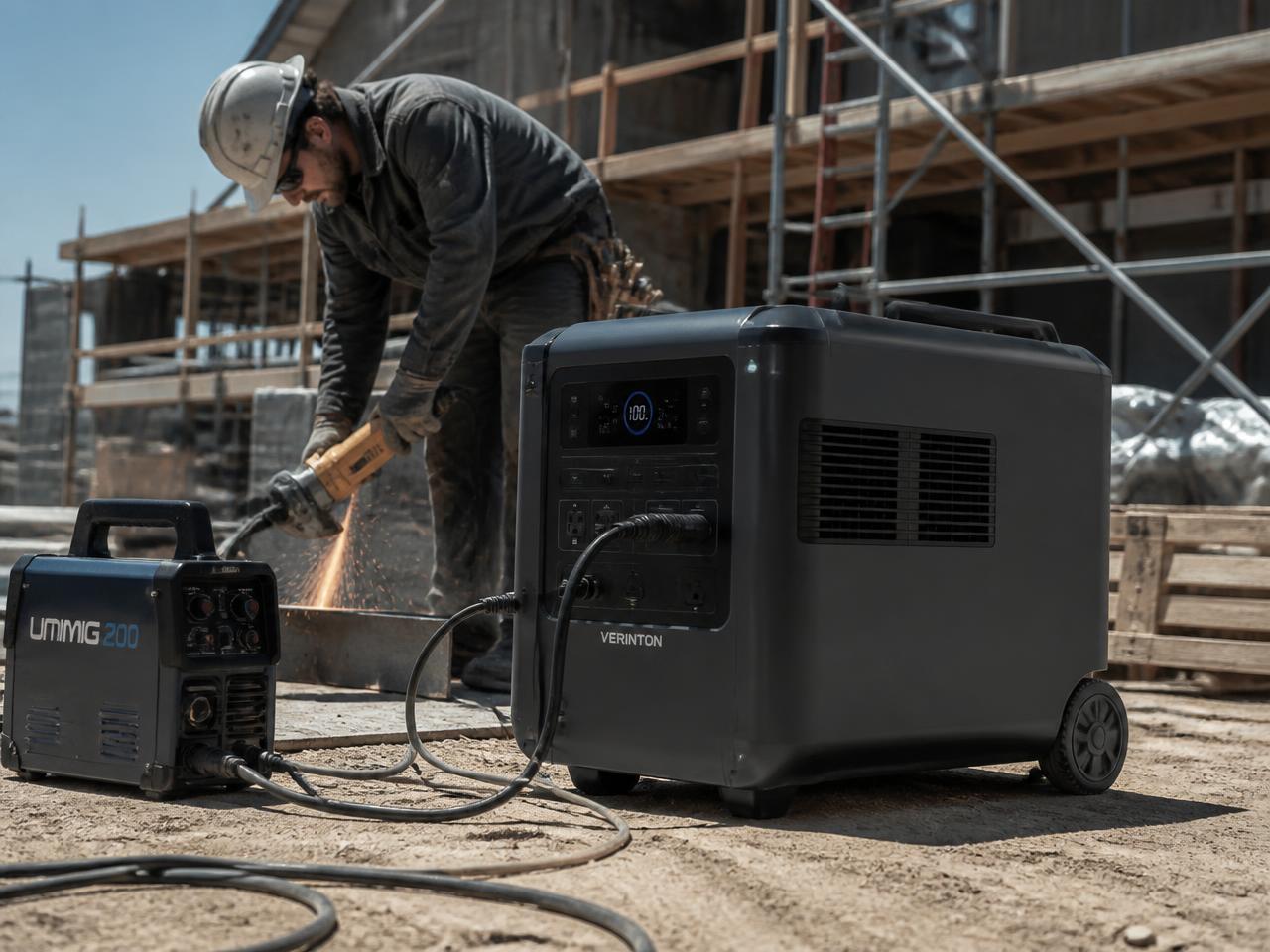

A 1536 Wh LiFePO4 station rated at 2000 W of AC output, with a 1.2 hour full recharge on 1500 W bi directional AC input plus car and MPPT solar charging up to 1200 W. Expansion batteries take the system to 4608 Wh, and a smart LCD screen with functional LED light keeps status and worklight in one place.
Recommended applications
Compatible & comparable
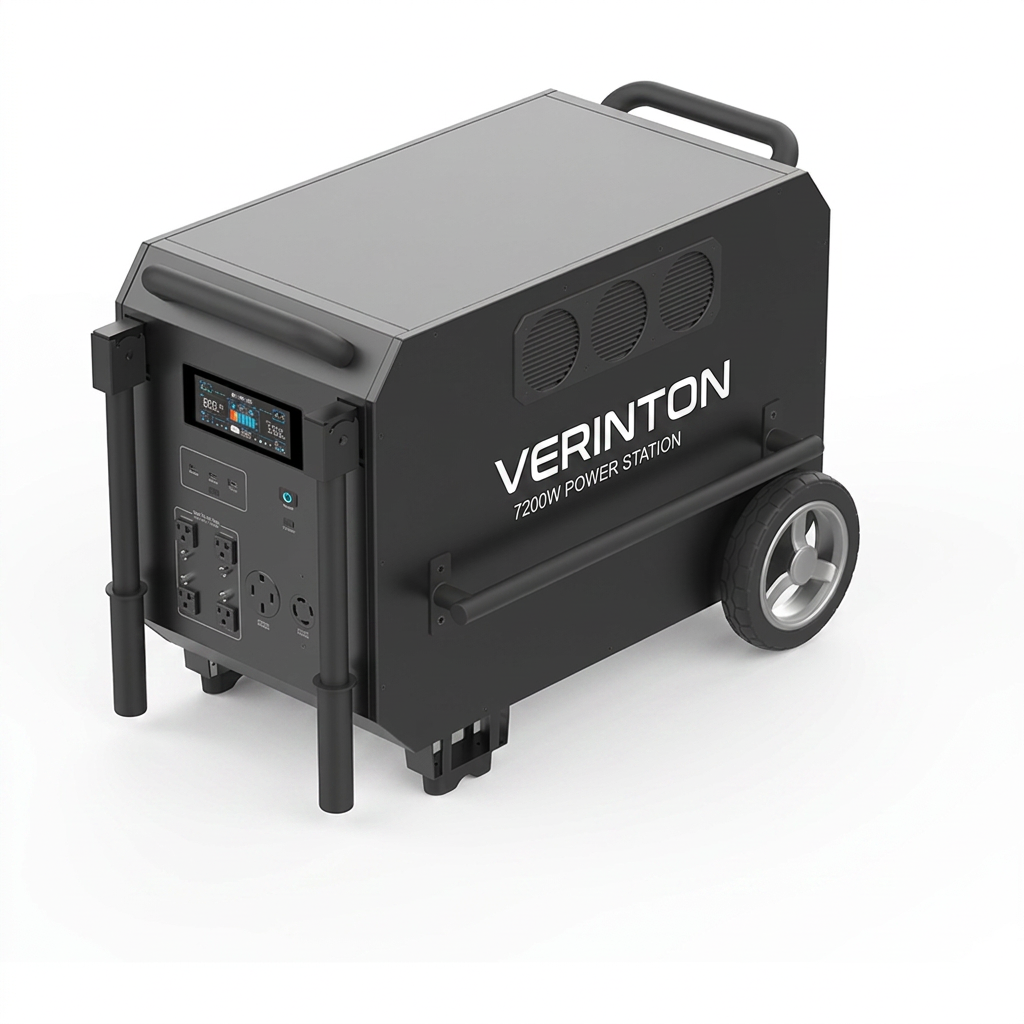
Get pricing for the VERINTON Prime 1800
Our sales engineers respond within one business day with configuration advice and availability.